Wednesday, 2 December 2015

Christmas Celebrations All Around the World

Christmas is a time to celebrate with friends and family during the cold winter months. Kick off the holiday season with a bang at these wonderful Christmas festivities all around the world, from America to Australia.

Old Town Square, Prague


It feels like Christmas comes to life in the city of Prague. The painted facades of the stone buildings look like opulent gingerbread houses and the church towers twinkle with lights. And in Old Town Square the effect is even more magical as the brightly decorated wooden huts surround the Christmas Tree, a 70-foot fir that stands out against the gothic skyline. Schoolchildren dressed in traditional costumes travel to Prague from across the country to sing Christmas Carols. And you can't miss the elaborate nativity scene! The Czech Republic is known for its intricately detailed nativity scenes, carved by hand and often installed with mechanical puppets. You can find miniature crèches and other handmade ornaments in the market, along with exotic goods like frankincense, handcrafted linens, and Christmas potpourri called "purpura." Try some Czech treats like large hams roasted on spits, barbecued sausages called "klobása," and cakes and pastries like "trdelnínk," baked right in front of you and covered in sugar. You feel like you've stepped into a fairy tale in Prague.

Galeries de Lafayette, Paris


Christmas is a season of splendor and romance in the City of Lights and nowhere more so than the Galleries de Lafayette. This prestigious store is one of the ritziest in the world, located on the beautiful Boulevard Haussmann in Paris. Seasonal splendors are on display in the windows of the luxury store Le Printemps, but the Galeries de Lafayette is home to the most spectacular Christmas decorations. The Art Nouveau mall has five floors of balconies circling a gilded atrium capped with a glass dome. And hanging from the center of the dome is a large Christmas tree! The tree is suspended above the shoppers below like a Christmas chandelier. Crystals and presents can also hang from the dome as well, creating a magical, airy feeling in the mall. We recommend going earlier in the day to avoid the crowds, purchase some Parisian designer goods, and experience Christmas in Paris.

Christkindlmarkt, Vienna


The oldest Christmas Market in Europe is in the imperial city of Vienna. The capital of Austria has held a market for small traders in December since 1294, and it slowly evolved over time into the "Christkinldmarkt." Today, charming wooden stalls and cozy pavilions fill the Rathauspark in front of the stately town hall. The Chriskindlmarkt is very traditional and walking among the little stalls is like walking into a romantic Christmas movie. Little red hearts, lights, and candy canes hang from the skeletal trees. The aromas of candied fruits, cotton candy, hot chestnuts, and mulled wine drift through the sharp night air. Children can ride ponies and visit the Christkindl's workshop for arts and crafts. In Austria and Germany, presents are delivered not by Santa Claus but by the Christkindl, a beautiful young angel who performs vignettes on the Celestial Stage. Don't forget to ask for an autograph and take a picture, because you won't want to forget the enchantments of Christkindlmarkt.

Trafalgar Square, London


It's a wonderful time of year to be in London. The elegant streets are full of lights and seasonal markets, but the centerpiece of the city's Christmas decorations is the great tree in Trafalgar Square right next to Nelson's Column and the National Gallery. The tree is a gift from the people of Oslo, Norway, to the people of Great Britain, thanking them for their help during World War II. In November, the Mayor of Westminster travels to Norway and selects the tree alongside the Mayor of Oslo. At the beginning of December the tree shines with hundreds of lights strung in Norwegian fashion, draped in vertical lines from top to bottom. For many Londoners, the tree lighting in Trafalgar Square marks the traditional start of the Christmas season. But it's not just about shopping! Carolers gather at the base of the tree almost every day before Christmas to raise money for charities, honoring the true spirit of the season.

Rockefeller Center, New York


Christmas at the Rockefeller Center is an annual tradition in New York City. The Center carefully selects the perfect Norway spruce and bring it into the city on a custom 125-foot truck. The tree is raised in front of 30 Rockefeller on the first Wednesday after Thanksgiving. This year, the tree will be 78 feet high topped with a 9 and ½ foot Swarovski crystal star and 45,000 lights. The lighting of the tree is a huge party broadcast live on NBC. The famous Rockettes dance the night away and afterwards you can head on down to the Radio City Christmas Spectacular. Now this is Christmas in New York, New York! Of course, it's come a long way since the tradition began during the great Depression in 1933, the year 30 Rockefeller Center opened. Workers erected a small fir and decorated it with cranberries, paper garlands, and a few tin cans.

Cantagalo Park, Rio de Janeiro


It might not snow in Brazil but the spirit of Christmas is alive and well in Rio de Janeiro! Since 1995, the city has raised a gigantic floating Christmas tree on barges in Cantagalo Park in the Rodrigo de Freitas Lagoon. Last year the artificial tree was 280 feet high and weighed over 550 tons, floating on 11 massive barges on the water. Thousands of people gather on the shore of the lagoon to watch the tree lighting, and it's the third largest party in Rio (after Carnival and New Year's Eve). The insurance company Bradesco Seguro puts on a fantastic show every year, including music provided by famous singers and a symphony orchestra, fireworks, actors, and, of course, 3.1 million individual lights that display a series of colorful images on the tree itself. Enjoy Christmas on the beach in Brazil.

Mysterious Korean 'Ghost Ships' Found in Japan: What We Know

Tests are being carried out on decomposed bodies found aboard so-called "ghost ships" that have entered Japanese waters in the past five weeks.
The key questions facing authorities: Who are they? And where did they come from?
Evidence found on the boats and their grim cargo suggest they came from North Korea. But are they attempted defectors or fishermen who've strayed too far from land?
Here's what we know so far.
This ship was found in mid-November floating off Noto peninsula off the coast of Ishikawa prefecture.
The boats
    This isn't the first time boats carrying bodies have been found off Japan, but it's the first time they've generated so much interest.
    The Japanese Coast Guard says that it's been happening for years, though it only has data for the last five. In 2011, 57 were found. In 2012, it was 47, and in 2013, 80 washed up or were found floating at sea.
    In 2014, 65 were found and the count so far this year is 34. That's a total of 283 boats in five years -- however the Coast Guard hasn't disclosed how many bodies were on board.
    What's unusual about the current batch of boats is that so many have been found in such a short period of time -- 12 within five weeks.
    "We think they possibly met with an accident due to the weather, but we can't confirm as the condition of dead bodies were bad," a Coast Guard spokesman told CNN.

    How long had they been at sea?

    It's unclear. The bodies found on the second of the most recent boats to arrive appeared to been one to two weeks post-death.
    Some of the 10 bodies found on three boats on November 20 could have been there for up to three months, the Coast Guard said.

    Diamonds, Move Over: Scientists Make Harder, Brighter Q-carbon

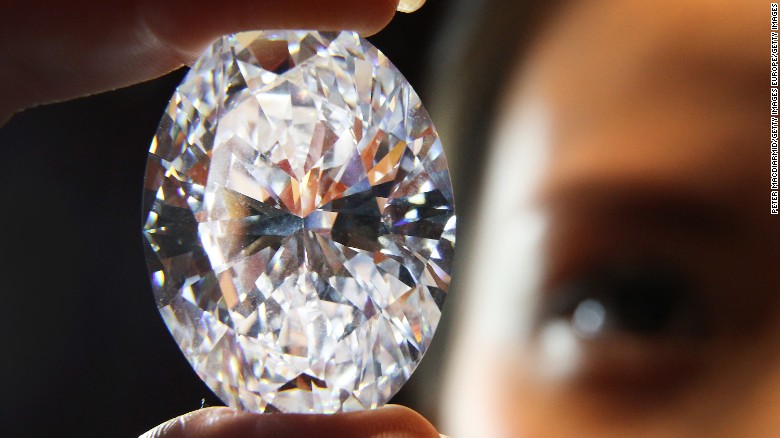
    A Sotheby's employee holds huge white oval diamond that was auctioned in 2013. Scientists have created a substance that can now outmatch a diamond in hardness and brilliance.
    Scientists have created a substance that blings even brighter than diamonds, but chances are you won't wear it. You'll take its byproducts as medicine instead.
    It's called Q-carbon, and researchers at North Carolina State University have made it by zapping a kind of loose carbon with a laser beam that lasts a fraction of a fraction of a blink of an eye -- 200 nanoseconds.
    That's only 200 billionths of a second, but it's enough to heat the carbon to about 3,700 degrees Celsius. That's not far from double the heat many scientist say it took to make natural diamonds when they were formed a billion or more years ago.
    Then the researchers let that carbon cool immediately, snapping its atoms into a special crystalline structure.
    The result is a new substance that may have never existed on Earth before and has some unique properties.
      The researchers published their results in the Journal of Applied Physics.

      About that carbon

      Carbon gets a lot of bad rap these days as a culprit of global warming. But that's mostly carbon dioxide -- carbon joined in a molecule with oxygen.
      In its pure form, carbon is something very different altogether. It only exists in a few solid forms, which contrast sharply from one another because of how they are put together.

      Camping in the Cold: Forget Shivering Under Canvas and Check into a Cosy Container or Heated Hut

      Rusty the Tin Tent

      These places have been popping up on farmers' fields like mushrooms, and while they often come with perks such as TV and wi-fi, in winter it's warmth that's the essential luxury.
      Heavy metal
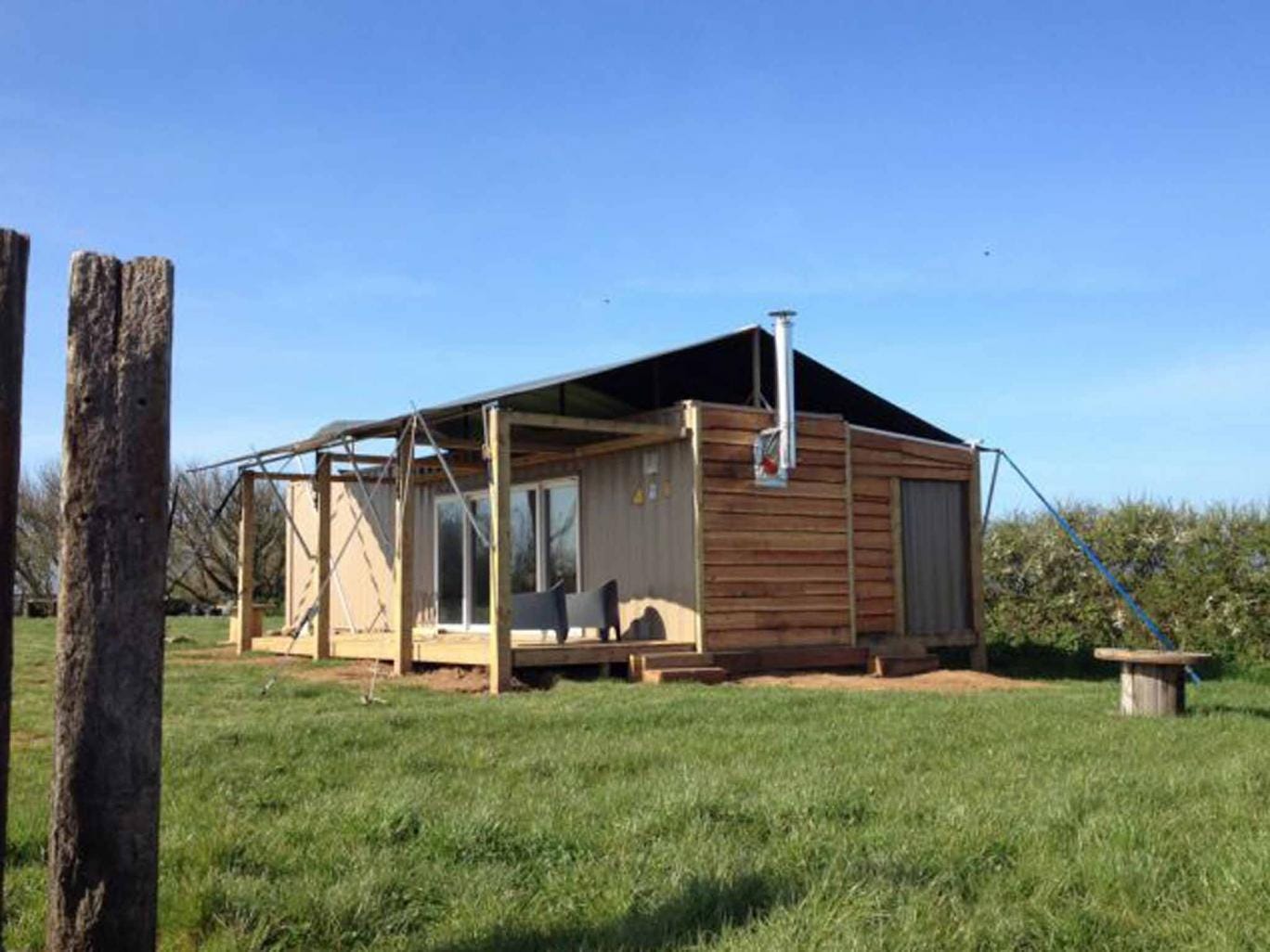
      Rusty the Tin Tent is a fully insulated converted shipping container on Cornwall's Lizard Peninsula, just a few minutes' drive from two beaches. It's set in an Area of Outstanding Natural Beauty, in a seven-acre field which at this time of year you'll have all to yourself. 
      There's a double bed on a raised platform and two singles below, all with heavy duvets. Keep warm with a wood-burning range on which you can cook. There's a walk-in hot shower and a flush loo, while decoration is industrial meets vintage: chipboard walls, furniture made from pipes and plenty of sheep, reindeer and cow skins. By night, wrap up and toast marshmallows over the outdoor fire-pit. From £285.60 for three nights (01326 555 555;classicglamping.co.uk).
      A cabin at the Lazy Duck site

      Peak time
      In Cairngorms National Park, the small Lazy Duck campsite has two cosy wooden cabins, each with a double bed, wood-burner, a gas cooker and solar power. 
      Bathroom facilities are fairly rustic: fill a canvas bag with hot water and haul it into the trees for a bracing outdoor shower; there's an outdoor composting toilet and a potty for night-time. There is, however a wood-fired hot tub and a sauna. By day, watch waterfowl and red squirrels, while after dark you have the chance of spotting the Northern Lights. From £190 for two nights (01479 821 092; lazyduck.co.uk).
      The House Box

      Airport Art That's Super Trippy

      A gallery dedicated to toilets? A robot repair shop? Is it us, or has airport art gotten decidedly trippy?
      Then again, there are worse ways to spend a layover. We've curated some of the most inventive art currently on display at the airport.
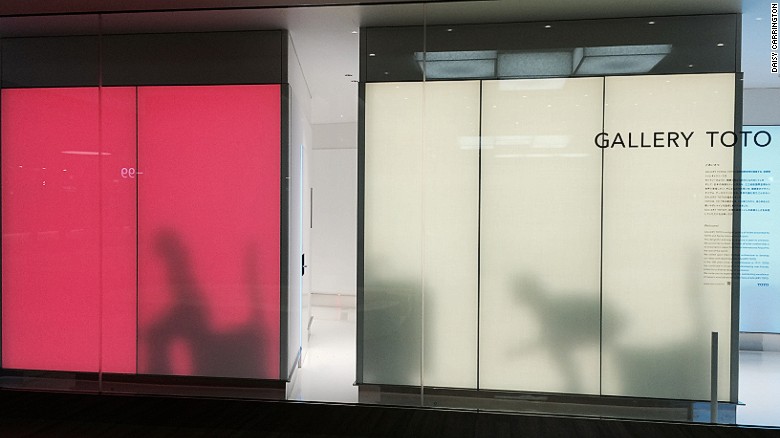
      Gallery Toto, Narita International Airport
      Everyone knows about the state-of-the-art toilets in Japan, but at Tokyo's Narita Airport, they are -- literally -- a work of art.
      The public toilets in the passageway to Terminal 2 are housed in Gallery Toto (Toto is the brand responsible for most of the country's bathroom innovations, including the cleansing, antibacterial jets that shoot out of the bowl).
      The gallery itself is sort of an ode to all things... well, toilet-related. The facade features a multicolored LED screen that showcases silhouettes of figures dancing around a toilet.
        If nothing else, the artwork has a way of making bathroom-time seem like an exhilarating experience (which, if you're using a Toto, it probably is).

        Fraley's Robot Repair Pit, Pittsburgh 

        International Airport
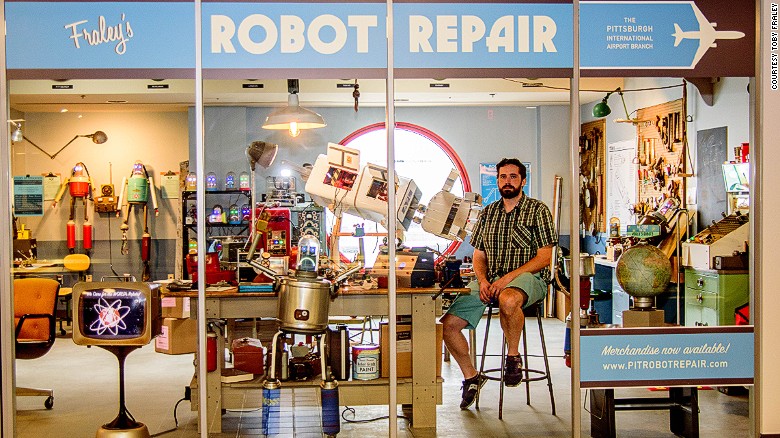
        Even fliers who don't currently have a retro robot on the fritz will appreciate the robot repair shoprecently installed at Pittsburgh International Airport.
        The art installation was the brainchild of Toby Fraley, who won a public art award for a similar exhibit in an empty Pittsburgh storefront. A self-professed "aviation junkie," he approached the local airport authority about relocating.
        "I think it's always more exciting to see a piece of great art, as opposed to yet another book shop or fast food restaurant. Those are the only other entities breaking up the monotony between the identical gates," he says.
        The new shop is three times the size of the original, and is full of quirky little details that are sure to entertain passengers with time to kill.
        Moment Factory, Los Angeles International Airport
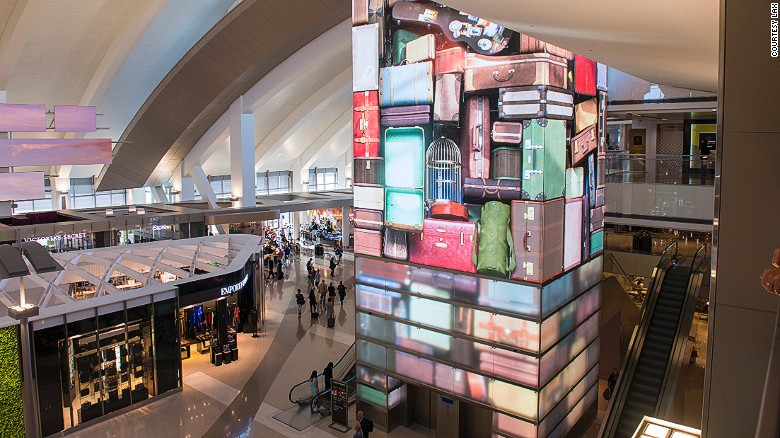
        At Tom Bradley International Terminal, the walls have eyes -- or that's how it can feel thanks to Los Angeles Airport's collaboration with Montreal-headquartered media studio Moment Factory.
        Among the seven multimedia features are a set of ten 8.5-meter walls that respond to passenger movements, unleashing surreal videos of dripping water or flipping tiles.
        The 22-meter Time Tower is the crux of what is the largest interactive multimedia exhibition in any American airport. The walls of the clock regularly break out in animations that mimic dancers operating the mechanics inside the timepiece.

        How to Take Perfect Cambodia Photos

        Sweltering heat.
        Busy attractions.
        The overwhelming scale of Angkor.
        These are just some of the difficulties that may prevent vacationers from taking memorable travel photos in Cambodia.
        But with good timing, smart locations and a little bit of patience, CNN cameraman Wesley Bruer shows how it can be done.


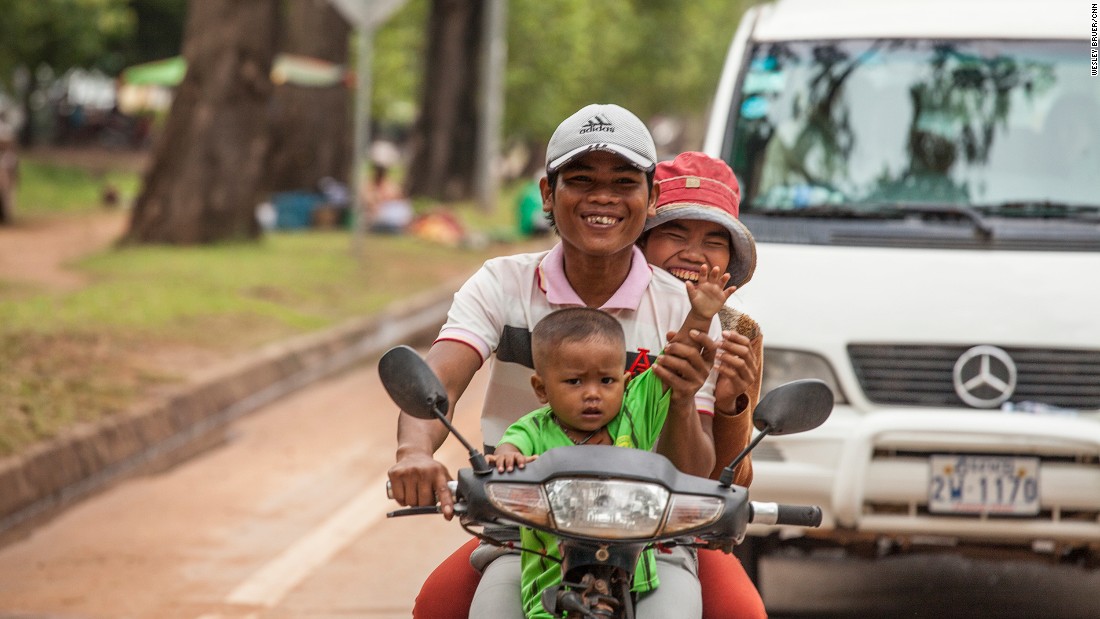
        Here, he is greeted by a family on the road to Angkor Wat in Siem Reap. "I like this type of introduction shot before entering the famous archaeological site," says Bruer. 


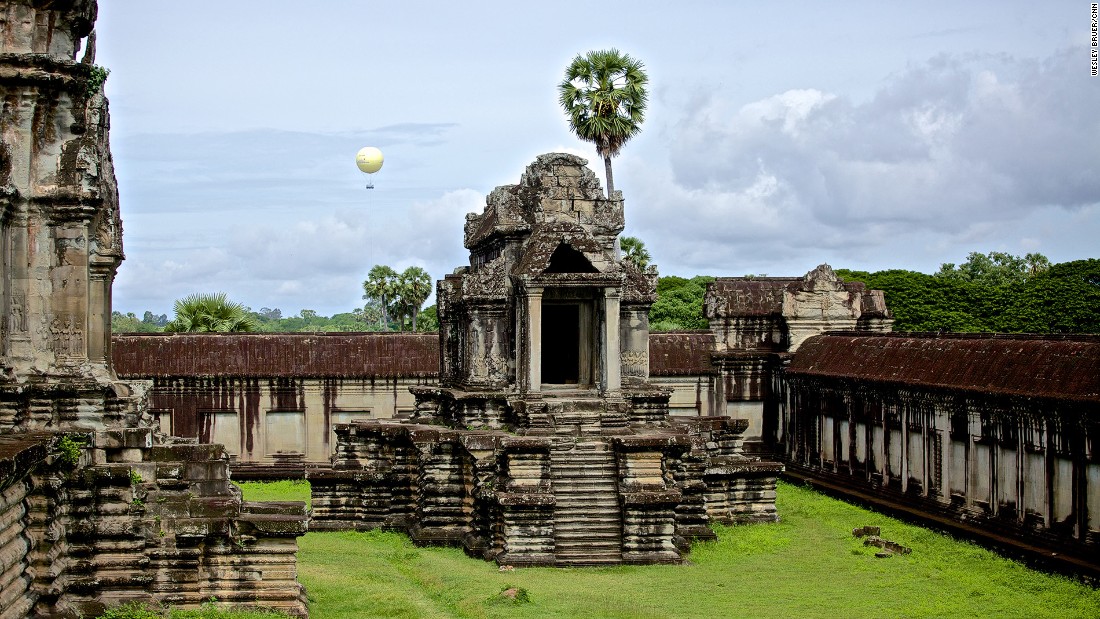
        1. Have a little patience- Bruer says: "This photo was taken while perched on the edge of the adjacent ruins, which gives the temple an eye-level perspective. As I framed the photo, I noticed a hot air balloon beginning to launch in the distance. I waited about 15 minutes for the balloon to rise and be visible from my vantage point. Once all the tourist cleared the area, I was able to capture this snap."


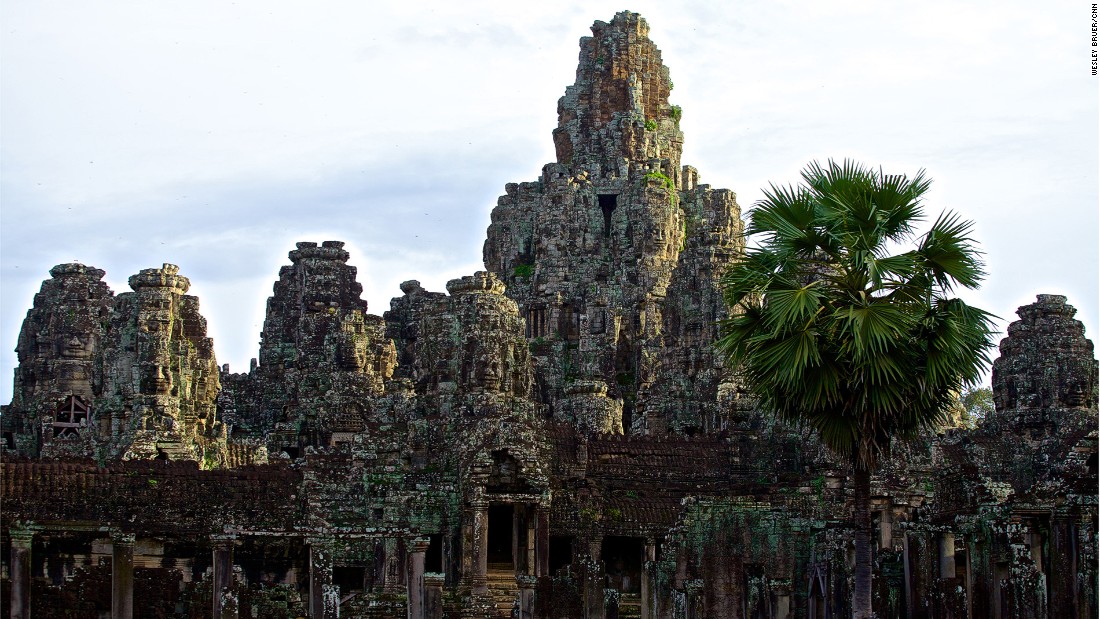
        2. Don't miss Bayon- The most intricate temple in Siem Reap, Cambodia, is Bayon.


        3. Don't hide from the Monsoon- Monsoon season in Cambodia is perfect for photographers. With few tourist in late August and September, you are able to get great views of the temples, neighbourhood and people.

        Tuesday, 1 December 2015

        A Journey on the Mekong - RV Mekong Prestige II


        The mighty Mekong River flows through the heart of South East Asia, rising in the Tibetan Plateau and passing through China, Burma, Thailand, Laos, Cambodia and Vietnam to make the world’s tenth longest river system. Flowing through gorges, swift rapids, mirror-like lakes and vast fertile floodplains - over 60 million people depend on it for food, water and transport. Only the Amazon basin boasts a higher biodiversity than the Mekong; it’s particularly known for its giant catfish and carp up to 9 feet in length.
        Our journey along this amazing natural marvel explores its fascinating water-borne worlds, from floating villages, stilt houses and colourful floating markets to the thousands of local boats plying its mud-coloured waters.
        We visit Cambodia and Siem Reap, gateway to the incredible complex of temples at Angkor. At its peak in the thirteenth century, with a staggering one million inhabitants, Angkor was the world’s largest city and capital of the fabulously wealthy Khmer Empire, encompassing Thailand, Laos, Cambodia and southern Vietnam. This is the largest complex of religious buildings ever created, 200 temples spread over 150 square miles in a truly astonishing fusion of Hinduism and Buddhism. Its incredible state of preservation, the beauty of design and the artistry of its sculptures have made Angkor one of the great wonders of the world.
        ‘Stepping back in time’ is a much-used cliché, but as our Mekong journey unfolds through some stunning countryside, it is absolutely suitable: farmers bent almost double beneath their traditional conical hats work in fields which disappear into the distance, whilst docile water buffalo methodically plough the rice paddies until the sun sets in a blood-red explosion of tropical colour.


        We cruise past tiny sampans being rowed to market, overloaded with everything from ducks, chickens and ripe fruit, to an imponderable number of bicycles! Lining the riverbanks are wooden houses, balancing precariously on stilts or gently bobbing on rafts of bamboo, whilst giggling children peep at the strange tall westerners gliding by.
        Beautifully located at the confluence of the Mekong and Tonle Sap rivers, wondrous Phnom Penh, long considered the most beautiful of the ‘French’ colonial cities of Indochina, is one of Asia’s most intriguing capitals. Almost completely depopulated during Pol Pot’s notorious regime, the city is again full of life and thriving once more.
        In Vietnam the people and landscape are different, with a faster pace of life and increased river traffic. Vietnam has for the past two millennia been ruled by the Chinese, Khmers, Portuguese and the Japanese, who have all left legacies in the temples and pagodas, together with palaces, fortresses and innumerable other buildings of every style. Then the French arrived, contributing cathedrals, fine mansions and neo-classical public buildings, not forgetting excellent baguettes and pastries – quite an eclectic mix! Many visitors inevitably recall the US-Vietnam war – who could forget those dramatic images of the frantic helicopter flights from the roof of the US embassy in Saigon, now over a generation ago?