Tuesday, 1 December 2015

This is Why KIGALI is UN's Most Beautiful African City

Image result for Kigali


Mirror mirror on the world... who's the beautiful of them all? And there you have it, the tropical city of hills and valleys becomes the latest and officially the most beautiful city in Africa. According to United Nations, Kigali, the capital of Rwanda is the most beautiful city in Africa. Who would have thought that a lowly yet potential location will be Africa's most beautiful? These leaves tons wondering, whatever happened to the continents fastest growing and leading economies? Lets get this clearly, Rwanda by the IMF evaluation 2014, takes the 1338th position-GDP per capita and 163rd by nominal GDP; Rwanda does not even make it to top 20th Africa's richest countries. So clearly, it has zero to do with the the figures, but maybe everything to do with the level of organization, aesthetics, cleanliness, proper management, just say keeping up a colourfully serene beauty.


Kigali is the economic hub and centre of Rwanda; with 720 KM2 measurement, it is home to approximately 1 million people. Perhaps the size and humble but vibrant economic prowess has made the aesthetics and general organization of the city a lot more feasible. Most city capitals are always spectacular but Kigali, Rwanda's capital takes the cake in Africa. What can we say, if UN made the declaration, then there just has to be something for the rest of Africa to learn from this exemplary capital city. 


Chengdu: Pandas and Skyscrapers in China's Flourishing Megacity


Ever-mushrooming building developments, Chinese traditions and spicy cuisine combine in Sichuan's capital.

Central Chengdu Getty
"When I visited Chengdu two years ago, the capital of China's south-western Sichuan province felt like a city hovering between the past and the present. The laid-back Sichuanese would while away the hours in teahouses, amble around the parks, and buy fresh fruit from hand-drawn carts, while beyond, the chaos of construction – roads being dug up, entire blocks being torn down, subway lines being carved out of the ground (Chengdu currently has two, but plans for seven by 2017) – carried on at ear-rattling speed.
Chengdu's latest development, Taikoo Li, opened earlier this year. A shopping complex built around the centuries-old Daci Temple, its concept was imported from Beijing, with buildings styled as traditional hutongs – yet almost every one is filled with international brands.
Despite the changes, on my most recent visit, a few weeks ago, Chengdu seemed to retain its easy balance between old and new. The spicy food – always regarded as some of the best in China – is central to the city's culture, its “private kitchens” (tiny restaurants set up in apartment blocks) offering a doorway not just to the local food, but also the lifestyle. 
And while ever-mushrooming developments may contain wall-to-wall chains, people still flock to the traditional craft stalls of Jin Li and Kuanzhai Alley. 
“As the city becomes more international, local people still follow tradition,” says Seven Zhu, who works at the city's newest hotel, The Temple House. “They drink tea and play mahjong, and I know more than 20 of my colleagues go for traditional tui na massage after work. We're moving towards the future but we're also holding on to our history.”
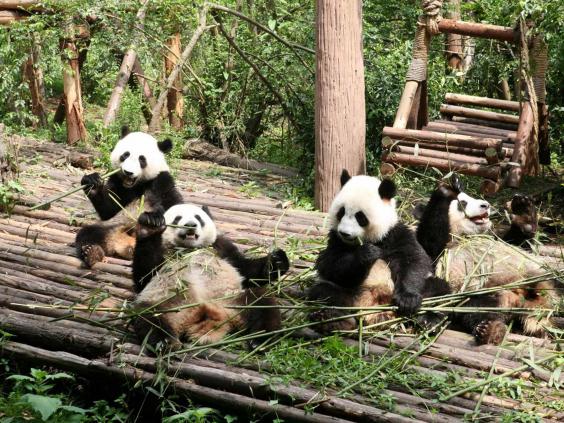
Pandas (Alamy)
It's that natural merger of east and west that makes Chengdu such a treat. It's manageable in size, with acres of green space (at weekends it seems half the city flocks to People's Park for dancing and qi gong), and has one-man craft stalls alongside behemoth developments, and a food scene that goes from strength to strength. A city that used to be best known for breeding pandas (a record 12 were born here this year) is now a fully fledged destination in itself.

Borneo's Endangered Orang-utans are Clinging on in the Rainforest

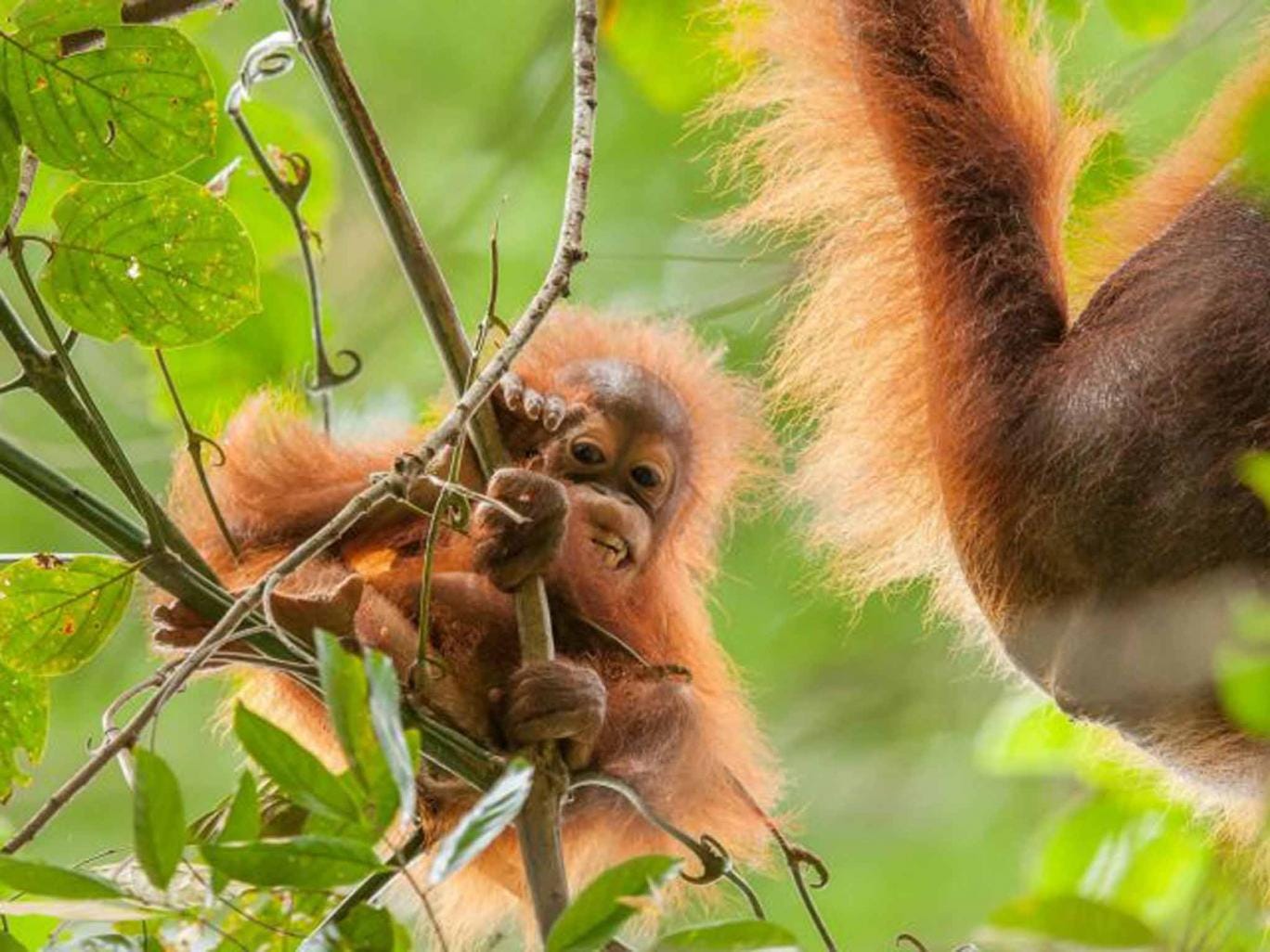
Baby orang-utan are nurtured by their mothers for seven years Charles Ryan
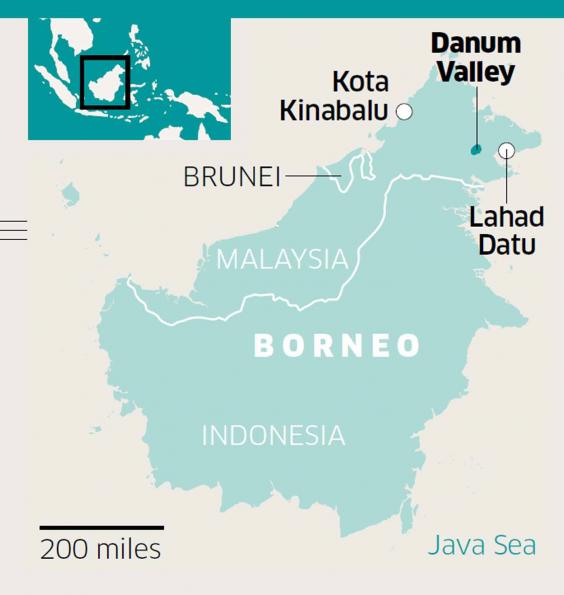
Our guide, Ateh, freezes statue-still, sniffs the air, then whispers “Ssh ...” pointing up at the church-high canopy. I feel my pulse quicken with expectation, for this is our third and final day searching the pristine rainforest of the Danum Valley in Malaysian Borneo for the endangered orang-utan. We've seen plenty of other wildlife as we've variously tramped across rheumatic-looking tree roots, scrambled over fallen dipterocarp trunks, body-swerved sleeping pythons and crossed rivers on shaky suspension bridges. But the orang-utan? We might as well have been pursuing Lord Lucan. 
“Where?” I mouth to Ateh. 
Something large and slow shifts into view a few feet away ...

Further south, Kalimantan – Indonesia's section of Borneo – is rich pickings for everything from diamond extraction, offshore oil rigs, and open-pit mining, to massive incursions into the rainforest by palm oil plantations. However, this has been perhaps one of the worst years for environmental disasters in the region. From April to October, the annual slash and burn by palm-oil companies clearing and planting forests drove vast plumes of smoke across South-east Asia as far as Singapore and the Malaysian peninsula. El NiƱo had already delivered drought and the tinder-dry conditions proved perfect for the burning peatlands on which the forests have their roots (and store vast reservoirs of carbon dioxide) to advance. Smouldering like a vast underground stove, burning up to 10 metres high, the fires were soon out of control and were impossible to put out – the worst Kalimantan had seen in decades.

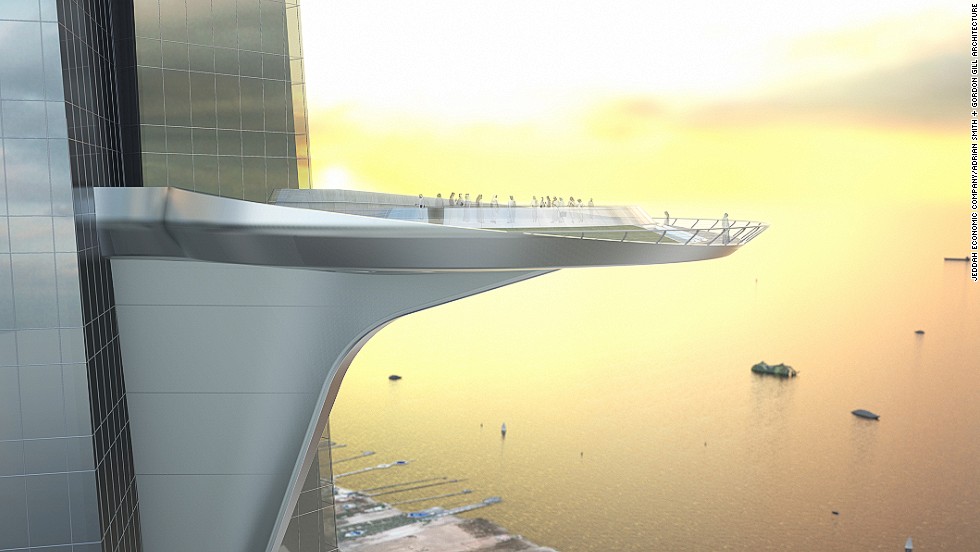
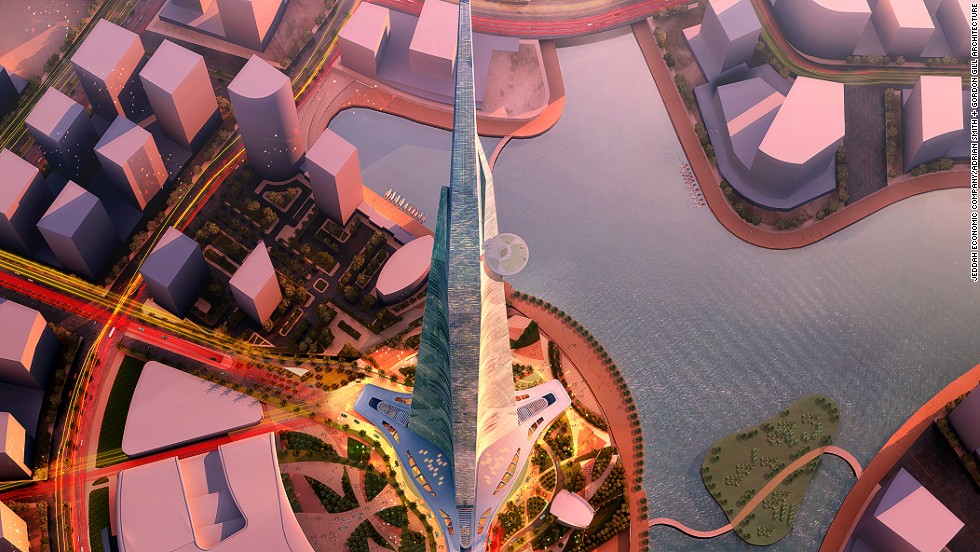
Saudi Arabia to Build World's Tallest Tower, Reaching 1 Kilometre into the Sky

Dubai, long champion of all things biggest, longest, and most expensive, will soon have some competition from neighbouring Saudi Arabia.

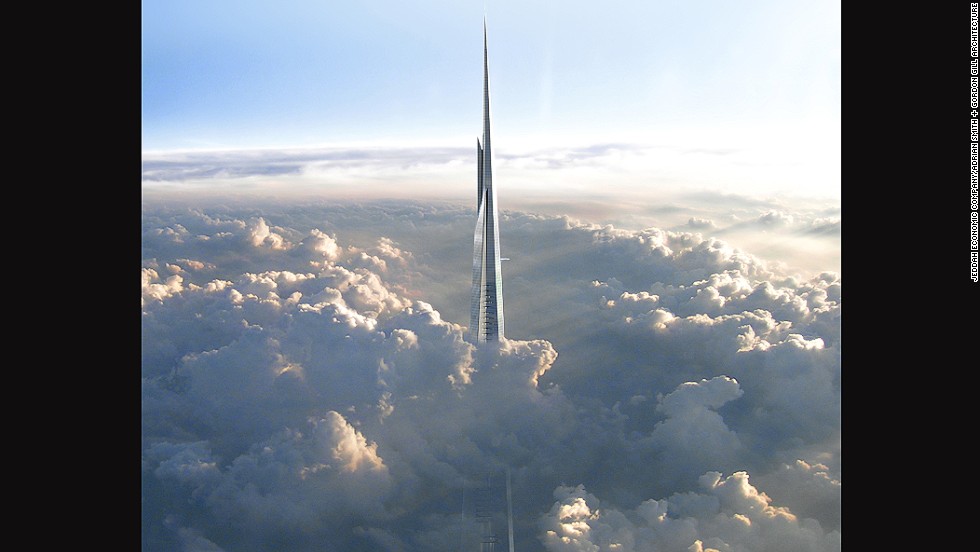
Dubai's iconic Burj Khalifa, the world's tallest building, could be stripped of its Guinness title if Saudi Arabia succeeds in its plans to construct the even larger Jeddah Tower -- a prospect looking more likely as funds for the $1.23 billion project have been secured.
A Saudi government press release on Sunday said Jeddah Economic Company and Saudi Arabia's Alinma Investment had signed a financing deal for 8.4 billion Saudi riyals (or $2.2 billion) to build Jeddah City, including the sky-piercing tower.

The project is currently built up to the 26th floor, it added. The 3,280-feet (1 kilometre) skyscraper is scheduled for completion in 2020. The Burj Khalifa, by comparison, stands at a meeker 2,716 feet, or 827 meters.
"With this deal, we will reach new, as yet unheard of highs in real estate development, and will fulfill the company's objective of creating a world-class urban centre that offers an advanced lifestyle, so that Jeddah may have a new iconic landmark that attracts people from all walks of society with comprehensive services and a multitude of uses," said Mounib Hammoud, Chief Executive Officer of Jeddah Economic Company.

Meet the 'Homeless Man' Who Flies the World First Class


For the last year and a half, Ben Schlappig has been essentially homeless. The 25-year-old American has no fixed address, nor the keys to his own front door. Why bother paying rent, he figured, when a bed was only ever a first class ticket away?
Schlappig is a "Hobbyist," as those in the game call it -- a professional traveler with an almost obsessive attention to fine print, who uses a mixture of frequent flyer miles and credit card reward points, to zoom around the globe for a fraction of the cost. And in the kind of luxury mere mortals could only dream of.
Since he first started racking up air miles a little over a decade ago -- yes, he was just 14 when he started this -- Schlappig says he's never flown economy on an international flight.
Which is no mean feat, considering the native New Yorker typically flies 400,000 miles a year -- enough to circumnavigate the globe 16 times. Schlappig spends an average four hours on a plane each day, and takes at least one international flight per week.
    When he is on land, the marketing graduate rests his head in similarly opulent hotels -- though he doesn't like spending more than three days in one place.
    "The airplane feels like home now," says Schlappig, speaking by phone from Los Angeles, where in typical style he's preparing to fly to Madrid the following day.
    "I feel as at home in Emirates first class, as I do anywhere else. I know every aspect of the seats; there's a certain familiarity with the staff; I tend to run into the same crews."
    Indeed, scroll through Schlappig's Instagram feed and you'll find photo after photo of obscene onboard luxury -- shower spas decked out in marble finishing; double beds in private suites; silver service meals with enough champagne to make his 36,000 followers giddy with jealousy.
    But as Schlappig is quick to point out in his hugely popular blog, called "One Mile at a Time," this level of opulence is not beyond the means of the average traveller -- they just need to be prepared to do their research.
    "If it was easy and straight forward then everyone would do it," he says, adding that Hobbyists are people who "enjoy reading the fine print," and range from college students to 80-year-olds.
    "I think a lot of people are skeptical because we're taught in our lives that there's no such thing as a free lunch, and that if it sounds too good to be true then it probably is. "
    Collecting miles is one thing. Redeeming them is "where it gets tricky," said Schlappig.
    "The airlines make it extremely difficult to redeem those miles, by design, because they want you to be hooked on this currency."
    And if anyone is willing to go the extra mile to maximize their points, it's Schlappig, who became "voluntarily homeless" last year after moving out of his Seattle flat for good.
    His obsession started as a 14-year-old when he saw a United Airlines flyer offering 5,000 extra miles for every segment flown.
    Schlappig convinced his parents to let him spend the summer flying across the country racking up points, promising their next trip to visit family in Germany would be on a first class ticket.
    By the end of the summer, the teenager had rarely left the airport, sometimes making eight flights over one weekend, and emerged with an elite airline status.
    How on earth did he get his parents on-board with such an extreme mission?
    "My older brother passed away at a young age, and before that my parents were always very focused on school and being successful later in life," explained Schlappig.
    "And then with me, they were like 'OK, you should enjoy your life,' and saw that it was something I was really passionate about. I don't think they ever thought I would turn it into a career. It was just a childhood obsession."
    But when your home is always the nearest hotel, doesn't it make it difficult to maintain relationships?
    "Frankly, I have a hard time maintaining relationships even when I'm in the same place," says Schlappig. "So it's hard, but my good friends understand what I do. As for romantic relationships, it's a little more difficult.
    "But the bizarre part is I develop friendships with people that work all over the places I frequent. You might see them once a week for two minutes at a time, but in a weird way you pick up where you left off."

    17 'Star Wars' Locations That Actually Exist

    (CNN)Plenty of people dream of travelling to other planets.
    But "Star Wars" fans can actually visit locations where many of the films' most famous scenes were shot.
    Some aren't even as remote as one might expect.
    From dinner at Luke Skywalker's childhood home to a romantic balcony where romance blossomed, here are some of the places where "Star Wars" comes to life.
    Ajim, Island of Djerba, Tunisia

    The cantina where Luke and Obi-Wan get stopped by sandtroopers is in the middle of the island town of Ajim.
    The building, once a bakery, went out of use and can be hard to find.
    The GPS coordinates are 33°43'26.69″N, 10°44'59.95″E.
    Obi-Wan's home is easier to find, ironically located right on the Mediterranean Sea and much more beautiful than its desolate film locale.
    A lovely spot for a building that's used by fishermen as a storeroom.

    La Grande Dune, outside Nefta, Tunisia

    The igloo exterior of Luke's house was filmed about 300 kilometers away on the dried-up salt lake of Chott El Jerid.
    The igloo is still there, reachable with a decent car at the GPS coordinates 33°50'34.42″N, 7°46'44.48″E.
    The surrounding craters are man-made, to create the illusion that the underground house is next to it.
    The igloo from the 1977 movie was dismantled, but again rebuilt for "Attack of the Clones," and later restored by a fan.
    Nearby is La Grande Dune, site of the Dune Sea.
    About 30 minutes from the igloo is the set of Mos Espa, the spaceport town where Anakin was discovered as a young slave.
    Hotel Sidi Driss, Matmata, Tunisia

    Perhaps the most famous "Star Wars" landmark in the world, this is where the interiors of Luke Skywalker's childhood home on planet Tatooine were filmed.
      Centuries ago, Berbers built the underground structure as a real home.
      Eventually it became a hotel, which George Lucas used to film the first "Star Wars" film.
      The set decorations came down when the crew left, but were rebuilt in 2000 for "Attack of the Clones."
      Since then, they've remained, so guests can eat at the table where young master Luke did.
      Mayan ruins in Tikal National Park, Guatemala

      Thousand-year-old Mayan ruins are the backdrop to the Rebel Alliance's Massassi outpost on the fourth moon of Yavin.
      Temples II and III reach over the jungle canopy, just as they do in the first shot of Yavin in "A New Hope."
      Redwood National and State Parks, California


      Endor, the forest moon home of the furry Ewoks, was filmed among California's giant redwoods.
      Most of the well-known scenes were shot on private land owned by a lumber company.
      Since the cast and crew worked on "Return of the Jedi" in 1982, heavy logging has left most of the landscape unrecognizable.
      But driving through the parks still gives a feel for the set, especially along the Avenue of the Giants highway.
      In Grizzly Creek Redwoods State Park and the Humboldt Redwoods State Park, plates were filmed for some chase scenes.
      Whippendell Woods, UK

      The forest of Naboo, where Jar Jar Binks first meets Obi-Wan Kenobi and Qui-Gon Jinn in "The Phantom Menace," was filmed in England near the Leavesden Film Studios.
      Gungans like Jar Jar live in underwater cities, but there's no lake in Whippendell Woods.
      All the shots with water were created with digital effects.
      Plaza de Espana, Seville, Spain

      When Padme and Anakin arrive in Theed at a plaza outside the palace, they were actually in this plaza built for the 1929 Ibero-American Exposition.
      The real plaza is a half-circle ringed by a moat with four bridges.
      For the scenes in "Attack of the Clones" and "The Phantom Menace," the plaza was dramatically expanded to a full circle, and the building altered to include the towers and green domes of Naboo.

      AirlineRatings Names 'Most Excellent' Airlines for 2016


      AirlineRatings.com the world’s only safety and product rating website has announced the selection of Air New Zealand as its Airline of the Year for 2016.


      AirlineRatings.com celebrates and promotes excellence in the airline industry and the pinnacle of these efforts is its Airline Excellence Awards. Winners include: Qantas, Cathay Pacific Airways, Etihad Airways, Singapore Airlines, Virgin Australia, Kulula.com, Lufthansa, Delta Air Lines, Norwegian, Scoot, Virgin Atlantic and Virgin America.

      Airline of the Year
      Air New Zealand is being honored for the third consecutive year for its continuous passenger innovations, environmental commitment, record-breaking financial performance, operational safety and motivation of its staff that have cemented the airline an industry trendsetter.
      The editorial team, one of the world’s most awarded and experienced, also awarded the airline Best Premium Economy Class and Best Economy Class.
      AirlineRatings.com’s editorial team took special note of Air New Zealand’s comprehensive long haul offering which has two multi-award winning products in the Skycouch and Spaceseat for economy passengers.
      “Air New Zealand’s focus on its staff has resulted in outstanding performance right across the airline at every touch point,” said AirlineRatings.com Editor-in-Chief Geoffrey Thomas.
      “The innovation at Air New Zealand continues to dazzle and the airline has rolled out some stunning new technology including innovative tracking of unaccompanied children and a wonderful App to get you a prefect cup of coffee before your flight.”

      “Put simply Air New Zealand remains the industry leader and a textbook case of what an airline should be in today’s intensely competitive market.”
      Air New Zealand Chief Executive Officer Christopher Luxon says the airline is thrilled to receive the prestigious accolade three years in a row.
      “Air New Zealand’s 75th anniversary year has been outstanding. Customer satisfaction has lifted even higher, we've delivered another record annual financial result, the brand is in terrific health and we’re growing the business. But none of this would be possible without the contribution of our 10,500 employees globally who turn up every day with the most fantastic attitude and the passion for making Air New Zealand a truly great company.”. 
      Best First ClassThis award has been won by relative newcomer Abu Dhabi-based Etihad Airways which has shaken the industry with its First Class offerings.

      “Etihad’s commitment to excellence appears to know no bounds. The airline’s new First Class and Business Class offerings are quite stunning and have set the bar even higher in luxury travel,” said Mr Thomas.
      “In what is an incredible achievement in just over 12 years Etihad Airways has stamped itself not only as a major force in the airline industry but a trendsetter.”
      Best Business ClassSingapore Airlines has won Best Business Class and the award adds to a string of accolades the airline has won for its product offerings over the years.

      According to Mr. Thomas, Singapore Airlines’ revamped business class is really impressive. “It’s subtle, elegant, functional and very cozy,” said Mr. Thomas. “The airline has always listened to its customers and it shows again and again.”